JBL 334787-001 Crossover Network Speaker Terminal Receiver D38 Network/speaker /60
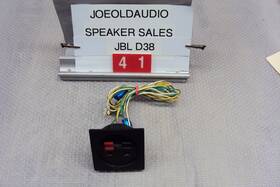
( Brand: Jbl ), ( Manufacturer Part Number: 334787-001 ), ( Model: JBL-D38 ), ( Type: Crossover Network Speaker Terminal P/n 334787-001 ), ( Custom Bundle: No ), ( Country Of Origin: Japan )
Review JBL D38 Crossover Network/speaker Terminal Tested /60 Watt Receiver
The JBL 334787-001 D38 Crossover Network/Speaker Terminal is a high-performance component designed to optimally connect and manage the audio signals in a professional-grade loudspeaker system. With a 60-watt receiver capacity, this crossover network is ideal for medium-sized installations that demand exceptional sound quality and precise frequency response.
This versatile component features a 3-way passive crossover design, allowing you to connect and optimize three different speakers for your system. The low-pass filter is engineered for your woofer, ensuring optimal bass response and protection against overloading. The mid-range filter is designed for your mid-frequency driver, ensuring clear and detailed mid-range frequencies. The high-pass filter is optimized for your tweeter, providing crisp and articulate high-frequency response.
The JBL D38 Crossover Network/Speaker Terminal is constructed with high-quality components and robust build quality. It features gold-plated binding posts for secure and reliable connections, ensuring optimal signal transfer and reducing the potential for corrosion. The terminal also includes a detachable grounding post, allowing you to easily ground your system for optimal signal quality.
The crossover network is designed for easy installation and integration into your system. It features clear and intuitive labeling for each input and output, allowing you to quickly and easily connect your speakers and amplifiers. The terminal also includes adjustable potentiometers for fine-tuning the frequency response of each speaker, providing you with the flexibility to customize your system for your specific application.
In summary, the JBL 334787-001 D38 Crossover Network/Speaker Terminal is a high-performance and versatile component designed for medium-sized professional-grade loudspeaker installations. With its 3-way passive crossover design, gold-plated binding posts, and adjustable potentiometers, this terminal ensures exceptional sound quality and precise frequency response, making it an essential component for any serious audio installation.
JBL D38 Crossover Network/Speaker Terminal (JBL 334787-001): A Comprehensive Analysis
Introduction:The JBL D38 Crossover Network/Speaker Terminal (JBL 334787-001) is a high-performance component designed for professional audio applications. This device allows for precise control over the frequency response of loudspeaker systems, ensuring optimal sound quality. In this analysis, we will explore the key features, benefits, and potential drawbacks of this JBL product to help you make an informed purchasing decision.
Features and Benefits:1. High-Fidelity Sound: The JBL D38 Crossover Network/Speaker Terminal is designed to provide accurate crossover filtering, ensuring that each frequency band is processed and delivered efficiently to the respective speaker driver. This results in enhanced clarity, improved imaging, and a more natural sound.
2. Versatile Application: This device is suitable for a wide range of applications, including live sound reinforcement, installations, and studio recording. Its robust construction and reliable operation make it an ideal choice for professional audio environments.
3. Advanced Filtering Capabilities: The JBL D38 Crossover Network/Speaker Terminal offers a range of filtering options, including Butterworth, Linkwitz-Riley, and Bessel filters. This flexibility allows users to tailor the sound to their specific application and preference.
4. Easy Integration: This component is designed to seamlessly integrate with various speaker systems and amplifiers. Its standardized 25-pin connector ensures compatibility with a wide range of JBL and third-party speaker models.
5. Durable Design: The JBL D38 Crossover Network/Speaker Terminal is built to withstand the rigors of professional audio applications. Its rugged construction and robust components ensure reliable operation in demanding environments.
Potential Drawbacks:1. Complex Setup: The JBL D38 Crossover Network/Speaker Terminal requires a more complex setup than passive crossovers or integrated systems. Users must carefully select and configure the filtering options for each application, which may require additional time and expertise.
2. Cost: Compared to passive crossovers or integrated systems, the JBL D38 Crossover Network/Speaker Terminal is a more expensive option. Its advanced features and high-performance capabilities justify the investment for professional audio applications.
3. Size and Weight: The JBL D38 Crossover Network/Speaker Terminal is a larger and heavier component than some passive crossovers or integrated systems. Its robust construction and advanced capabilities contribute to its increased size and weight.
Conclusion:The JBL D38 Crossover Network/Speaker Terminal is a high-performance component designed for professional audio applications. Its advanced filtering capabilities, versatile application, and easy integration make it an ideal choice for live sound reinforcement, installations, and studio recording. While it may require a more complex setup and carry a higher cost than passive crossovers or integrated systems, its enhanced sound quality and reliable operation justify the investment for those seeking optimal performance in their audio systems.
Recommendation:If you are a professional audio engineer or system integrator seeking the highest possible sound quality for your audio applications, the JBL D38 Crossover Network/Speaker Terminal is an excellent investment. Its advanced filtering capabilities, versatile application, and easy integration make it an essential component for any professional audio setup. While it may carry a higher cost and require a more complex setup than passive crossovers or integrated systems, the enhanced sound quality and improved system performance it delivers are well worth the investment.
Details:
Let's keep e B a y fun. Part sappers beware all my parts are marked. Custom forms or amounts will not be altered. I have 48 years of parts accumulation.
part #: 334787001 price
- $28.99
specifications partsvintageaudio:
- brand: Jbl
- mpn: 334787-001
- model: Jbl-d38
- type: Crossover Network Speaker Terminal P/n 334787-001
- custom bundle: No
- country of origin: Japan
seller partsvintageaudio:
- # reviews: 9100
- rating: 100.0%
- city: Islip, New York
general partsvintageaudio:
- condition: Used
- Vintage Audio Video > Vintage Parts Accessories > Other Vintage A/V Parts Accs
offer partsvintageaudio:
- quantity: 1
- availability: In Stock
- options: Ship-to-home
- sold: 0
- started: December 20, 2025
payments partsvintageaudio:
- other
- credit card: Diners-club
- wallet: Paypal
shipping partsvintageaudio:
- class: Standard, Economy
- service: USPS Ground Advantage, UPS Ground Saver, FedEx Ground Economy
- cost: $10.45
- carrier: USPS, UPS, FedEx
- type: Calculated
- transit: 19-23 Days
returns partsvintageaudio:
- policy: No Returns
Jbl 334787-001 Is Similar To:
- 3103 Jbl Crossover For 4301 (33.6% similar) Condition: this crossover was tested and sounds normal I have 2 others to compare it. This is a crossover I pulled from working Jbl 4301 speaker. It is 100 original components in their state...(July 18th, 2017)
- 66427-0060 Jbl Speaker Crossover Pair (34.2% similar) Up for consideration is a pair of crossovers originally from Jbl L20T. Tested and they are in functional working order...(July 17th, 2018)
- Bx63a Jbl For Network Speakers Subwoofer (38.3% similar) Vintage Jbl BX63A for dividing summing network speakers, sub woofer excellent working condition, one owner...(February 26th, 2019)
- 103463 Lancer Jbl Vintage 77 L77 Speaker Emblem Badge Logo Serial No (24.3% similar) Vintage Jbl lancer 77 L77 speaker emblem badge logo serial no. Other components from this speaker are available please see my other listings. Delivery confirmation is recommended...(May 16th, 2016)
- 4308 Jbl Vintage Rare Speaker Parts (26.1% similar) ...(September 2nd, 2016)
- 4311wx Jbl A Speaker Cabinets-with Grills Crossovers-consecutive Serial S (31.4% similar) You are getting the cabinets with the label follicles, crossovers, and grills only. Kenny rogers, Tanya tucker, and lob. This is a good pair of Jbl 4311WX a speaker cabinets. The grills are original and have no holes in the cloth. The veneer is in good shape overall. They work just as they should. ...(September 9th, 2016)
- Jbl Lansing Olympus Speaker (24.3% similar) Refinishing the top would put this cabinet in wonderful condition. The 15 woofer has been re-coned recently and sounds great. The other speakers are in perfect condition. This was one of the best large systems Jbl produced...(June 16th, 2018)
- Jm520 Control Mr25 Cm52 P205g Jbl Best Speaker Foam Surround Kit 1 Pro Iii M5 (25.5% similar) The surrounds in this kit are designed to fit and work properly like the original. No more folded envelopes or damaged goods with slow parcel post mail like many others use for sale is a high quality foam surround repair kit for Jbl control 1, pro iii, MR25, JM520, CM52, P205G, M5, M5A and Sb 1 ...(August 19th, 2016)
- L60ti Jbl Crossover Networks Pair (46% similar) Good used pair of 2-WAY crossover networks from Jbl L60TI speakers. Includes all wiring and connectors...(April 30th, 2017)
- Promaster Cc18 Speaker Cone 18 Fit Ev Jbl C-vega Peavey Jensen Dp (29% similar) This sale is for speaker cone. I've seen this done hundreds of times with success. Cone height shipping for 1 or 2 cones is tip for speakers with damaged cones but good spiders and coils it is possible to cut the existing cone leaving a small lip to set the new cone, gluing it to the coil sleeve. ...(March 17th, 2016)
- Srx 4702x Jbl Crossover (25.2% similar) Up for consideration is a crossover and input from Jbl monitor, model Sr 4702X. Tested and it is in excellent working order. There are some marks here and but unit is in excellent physical condition...(February 21st, 2017)